Showing posts with label legitimacy. Show all posts
Showing posts with label legitimacy. Show all posts
Monday, 21 September 2015
Unit 1: Democracy (direct & indirect) and participation
Democracy explained. Topics include:
Direct democracy
Indirect democracy
Participation
Representative democracy
Liberal Democracy
You should be able to link the above to key words like; legitimacy, consent,

Sunday, 8 September 2013
Unit 1: Past Question on power, authority and legitimacy
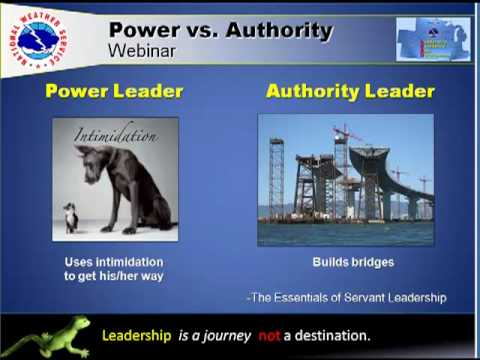
Distinguish, with examples, between power and authority. (5 marks)
How is legitimacy maintained in the UK political system? (15 marks)
Saturday, 22 September 2012
Unit 1: What is Government?
Author and journalist Danny Wallace takes a light-hearted look at the system of governance in the UK.
Tuesday, 11 September 2012
Unit 1 - Exam Answer
Q What is legitimacy? (5 Marks)
A
• 2 marks for each aspect of terms accurately identified
• Up to 3 marks for a more detailed or developed description of the term depicting comprehensive knowledge and understanding.
A
| Legitimacy means rightfulness. As such it can be seen as an approval term which may sanction political behaviour or conduct. • Legitimacy confers authority on an action, institution or political system. As such it distinguishes between power and authority, authority being power cloaked in legitimacy. • Political legitimacy stems from two sources. Firstly it arises from below, through the consent of the public, usually provided by regular and competitive elections. For example the results of an election may extend legitimacy to a new government, basing their mandate on the content of a successful manifesto. • Second it is based on rule-governed behaviour, in this case achieved through the existence of a constitution. For instance the former PM Gordon Brown initially claimed legitimacy to continue as PM after the last general election results as the constitution conferred the legitimacy to stay in post until the time a new government could be formed with Nick Clegg and David Cameron. • Legitimacy is associated with political stability and order, by contrast, regimes which are seen as illegitimate tend to foster instability and disorder. | |
AO1
| |
Knowledge and understanding
• Up to 3 marks for a more detailed or developed description of the term depicting comprehensive knowledge and understanding.
Saturday, 8 September 2012
Power, Authority & Legitimacy

Subscribe to:
Posts (Atom)